


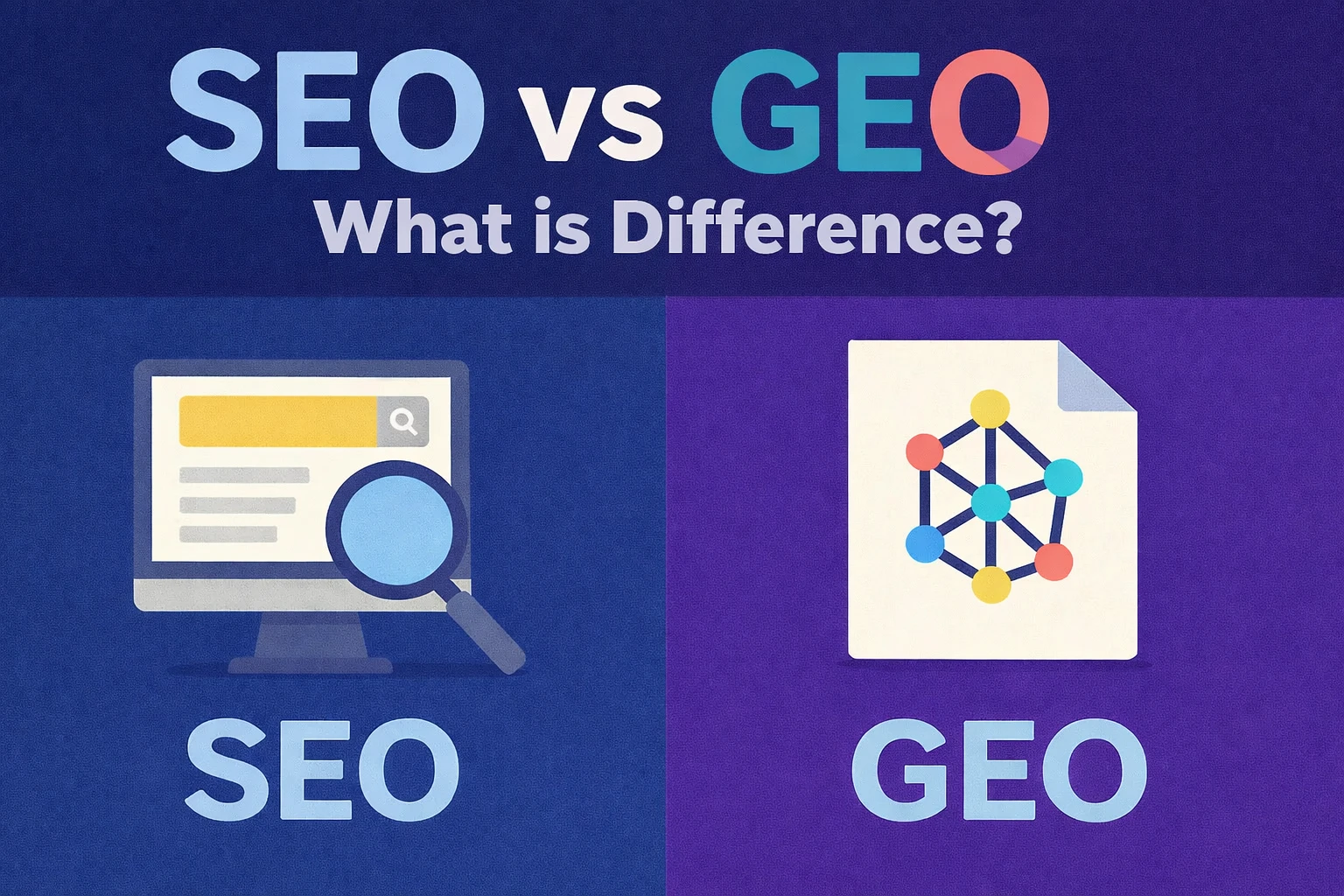
GEO vs Traditional SEO: Key Differences You Must Know in 2026
Search has changed dramatically. Users no longer just click links; they expect direct answers.This shift has brought a new strategy into the spotlight: Generative Engine Optimization (GEO). But does it replace traditional SEO services, or do both have a role to play?
Let's break it down clearly.
What Is Traditional SEO?
Traditional SEO focuses on improving your website's visibility on search engines like Google and Bing. It involves targeting the right keywords, earning quality backlinks, and ensuring your site loads fast on every device.Success here is measured by rankings, click-through rates, and organic traffic. When done well, SEO services drive a steady stream of visitors directly to your website.
What Is GEO?
Generative Engine Optimization (GEO) is built for AI-powered platforms like ChatGPT,Perplexity, and Google's AI Overviews. These tools don't list links; they generate direct answers by pulling from trusted content.
GEO services help your content become the source AI uses when answering user queries. Instead of ranking on a results page, your goal is to be cited inside the AI's response. Key Differences You Must Know
1. Target Platform
Traditional SEO targets search engines and their ranking algorithms. GEO targets AI models
that synthesize and summarize content before presenting it to users.
2. How Success Is Measured
With SEO, you track keyword positions, traffic volume, and bounce rates. With GEO services, success means your content appears as a cited source inside AI-generated answers.
3. Content Structure
SEO content is written to satisfy search algorithms and human readers simultaneously. GEO content must go a step further. It needs clearly structured headings, factual statements, and authoritative references so AI systems can easily extract and trust the information.
4. Keyword Strategy
SEO relies heavily on strategic keyword placement. GEO focuses less on specific keywords and more on answering questions directly, clearly, and completely. The writing must reflect what users genuinely want to know.
5. Link Building vs. Citation Building
Link building is the backbone of traditional SEO services. GEO shifts that focus toward becoming a citable, credible source that AI platforms reference when responding to queries.
What They Share
Despite their differences, both strategies share important common ground.
Both require high-quality, well-researched content. Both demand a clear understanding of user intent. Both benefit from organized structure and logical flow. Neither works well with thin, poorly written material.
In short, the foundation of good content creation supports both approaches.
Should You Choose One Over the Other?
Not at all. In 2026, the smartest brands invest in both.
Traditional SEO services continue to drive organic traffic from users who browse search results. GEO services position your brand as a trusted source inside AI-generated responses, reaching users who never scroll through a results page at all.
Ignoring either channel means leaving visibility on the table.
Conclusion
Search behavior is no longer one-dimensional. People use traditional search engines and AI tools interchangeably depending on their needs. Your content strategy must reflect that reality.
Combining proven SEO services with forward-thinking GEO services gives your brand the best chance of being found, regardless of where your audience is searching. Focus on quality, clarity, and relevance, and you will stay visible across every platform that matters.