


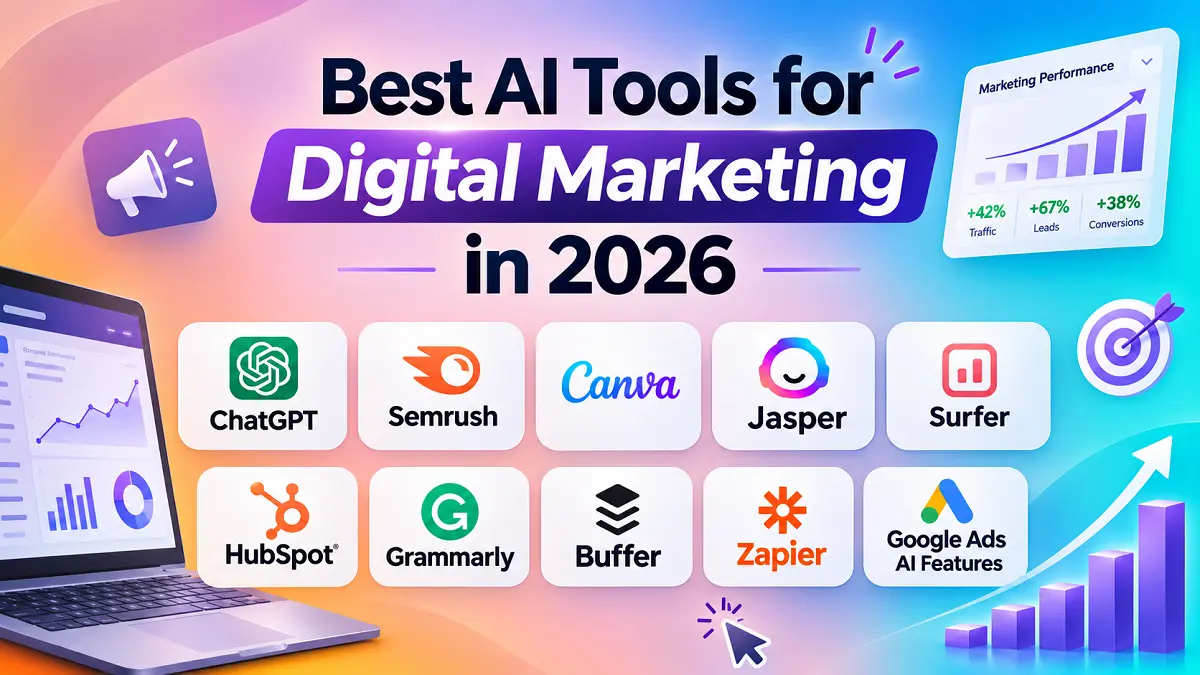
Best AI Tools for Digital Marketing in 2026
Artificial intelligence is changing how businesses plan, manage, and improve their digital marketing activities. From creating content and researching keywords to managing social media campaigns and analysing performance, AI tools help marketers complete everyday tasks more efficiently. They also make it easier to understand customer behaviour and develop marketing strategies based on useful insights.
With so many options available, choosing the right tools can be challenging. Here are some of the most useful AI tools for digital marketing in 2026 and how they can support different marketing activities.
10 Best AI Tools for Digital Marketing
Different AI platforms serve different purposes. Some focus on content creation, while others help with search engine optimisation, advertising, social media management, and automation.
1. ChatGPT for Content Creation and Marketing Ideas
ChatGPT is a popular AI assistant that helps marketers generate blog ideas, write social media captions, prepare email campaigns, and develop content outlines. It can also help with keyword research ideas, competitor analysis, and content planning.
Marketers can use it to create initial drafts and improve existing content. However, reviewing the output for accuracy, originality, and brand consistency is important before publishing.
2. Semrush for SEO and Competitor Research
Semrush offers several tools for keyword research, website analysis, backlink monitoring, and competitor research. Its AI-powered features help marketers identify content opportunities and understand how websites perform in search results.
It is particularly useful for businesses looking to improve organic visibility and develop a more organised SEO strategy.
3. Canva AI for Graphic Design
Canva AI helps marketers create social media graphics, presentations, promotional banners, and other visual content. Its AI-powered features can assist with image generation, design suggestions, and content editing.
Even users without professional design experience can create attractive marketing visuals for different digital platforms.
4. Jasper for Marketing Content
Jasper is an AI writing platform designed for marketing teams. It helps create advertising copy, website content, product descriptions, and email campaigns.
Businesses can use it to maintain a consistent brand voice across different marketing channels while reducing the time spent on initial content creation.
5. Surfer SEO for Content Optimisation
Surfer SEO helps content writers understand how to structure and optimise website content. It provides recommendations related to keywords, headings, content coverage, and competing pages.
It can be useful when preparing blog posts and landing pages that need to address relevant search queries and user expectations.
6. HubSpot for Marketing Automation
HubSpot offers marketing tools that help businesses manage customer relationships, email campaigns, lead generation, and marketing activities.
Its AI capabilities can support content creation, customer communication, and campaign management. It is particularly useful for businesses that want to bring multiple marketing activities together.
7. Grammarly for Content Editing
Grammarly helps marketers improve grammar, spelling, clarity, and sentence structure. Its AI writing assistance can also suggest ways to make content more professional, engaging, and readable.
It is a useful tool for reviewing blog posts, emails, website content, and business communication before publishing.
8. Buffer for Social Media Management
Buffer helps businesses plan, schedule, and manage social media content across different platforms. Its AI assistant can suggest post ideas, generate captions, and adapt content for different audiences.
It makes social media planning easier, especially for small marketing teams managing multiple accounts.
9. Zapier for Marketing Workflow Automation
Zapier connects different applications and automates repetitive tasks. For example, businesses can use it to send new website leads to a CRM, organise customer information, or trigger follow-up emails.
Its AI features also help users create and manage automated workflows with less manual effort.
10. Google Ads AI Features for Advertising Campaigns
Google Ads includes AI-powered features that help advertisers manage campaigns, discover relevant audiences, and improve advertising performance. Tools such as Performance Max use automation to optimise campaigns across Google’s advertising channels.
These features can help marketers manage campaigns more efficiently, although regular monitoring and clear campaign goals remain important.
How to Choose the Right AI Marketing Tools
Not every business needs the same set of AI tools. The right choice depends on your marketing goals, team size, budget, and daily requirements.
Consider these factors before selecting a platform:
Marketing goals: Identify whether you need help with SEO, content creation, advertising, or social media management.
Ease of use: Choose tools that your team can understand and use without extensive training.
Integration: Check whether the platform works with your existing marketing software.
Pricing: Compare free plans, paid subscriptions, and available features.
Accuracy: Review AI-generated content and recommendations before using them in marketing campaigns.
Businesses should also understand how these tools fit into their broader digital strategy. For example, GEO focuses on improving brand visibility in generative AI search experiences, while AEO Services help businesses structure information to provide clear answers to user queries. Similarly, AI SEO combines artificial intelligence with search optimisation activities to support content research, analysis, and website improvements.
Can AI Tools Replace Digital Marketing Professionals?
AI tools can handle many repetitive marketing tasks, but they cannot completely replace human expertise. Marketing still requires creativity, strategic thinking, audience understanding, and informed decision-making.
For example, an AI writing tool can generate a blog draft, but an experienced content writer must check its accuracy, relevance, and usefulness. Similarly, AI can identify SEO opportunities, but professionals need to decide which recommendations align with business objectives.
The most effective approach is to combine AI capabilities with human knowledge and experience.
Frequently Asked Questions
1. What are the best AI tools for digital marketing in 2026?
Some popular options include ChatGPT for content creation, Semrush for SEO, Canva AI for graphic design, HubSpot for marketing automation, and Buffer for social media management.
2. Are there free AI tools for digital marketing?
Yes. Several platforms offer free plans or limited free features. Examples include ChatGPT, Canva, Grammarly, and Buffer. Available features may vary depending on the plan.
3. How can AI tools improve digital marketing?
AI tools can help marketers research keywords, create content, analyse customer behaviour, manage advertising campaigns, schedule social media posts, and automate repetitive tasks.
4. Can small businesses benefit from AI marketing tools?
Yes. Small businesses can use AI tools to manage content creation, improve their online presence, automate customer communication, and complete marketing tasks with fewer resources.
5. Do AI tools improve SEO rankings?
AI tools can support keyword research, content optimisation, competitor analysis, and technical website reviews. However, using AI does not guarantee higher rankings. Search performance still depends on content quality, relevance, website experience, and other SEO factors.