


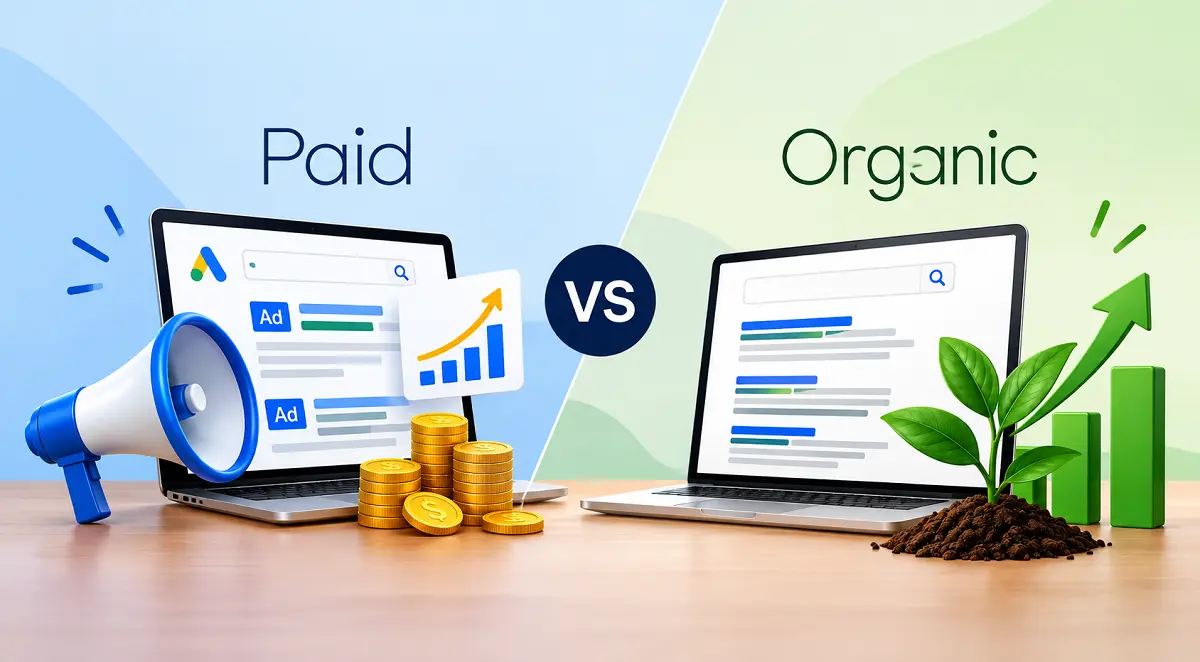
Organic vs Paid Marketing: Which Drives Better Website Traffic?
Every business wants more people to visit its website. But getting traffic is not just about being online. You need the right marketing approach to reach people who are genuinely interested in your products or services.
Two of the most common ways to attract website visitors are organic marketing and paid marketing. Organic marketing focuses on building visibility over time while paid marketing helps businesses reach potential customers quickly through advertisements.
Both methods can work well. The right choice depends on your goals, budget and how quickly you want results.
What Is Organic Marketing?
Organic marketing refers to methods that bring visitors to your website without paying for every click or impression. Search engine optimisation is one of the most important parts of organic marketing.
SEO improves your website so that it can appear higher in search results when people look for relevant information, products or services.
A professional SEO service usually focuses on areas such as keyword optimisation, useful content, technical improvements, internal linking and website performance.
Other organic marketing methods include:
- Blog content
- Social media posts
- Email marketing
- Video content
- Local SEO
- Business listings
- Online community engagement
The main purpose is to build visibility and attract people naturally over time.
What Is Paid Marketing?
Paid marketing involves spending money to promote your business through advertising platforms. One of the most widely used forms is pay per click advertising.
With PPC, businesses pay when someone clicks on their advertisement. Google Ads is a common example, although paid campaigns can also run across social media platforms and other websites.
A well-managed ppc service can help businesses target users based on keywords, location, interests, devices and other factors.
This makes paid advertising useful when a business wants immediate visibility.
Organic Marketing Builds Traffic over Time
Organic marketing usually takes longer to generate strong results. A new website may not reach the first page of search results within a few weeks.
However, once pages begin ranking well, they can continue attracting visitors for months or even years.
For example, an informative article answering a common customer question can generate traffic every time someone searches for that topic.
This is why businesses often invest in an SEO service as a long-term growth strategy.
Strong organic visibility can also build trust. Many users prefer clicking natural search results when researching products, services or information.
Paid Marketing Can Generate Traffic Quickly
One of the biggest advantages of paid marketing is speed.
A PPC campaign can begin bringing visitors soon after it goes live. Businesses do not have to wait several months for search rankings to improve.
This is particularly helpful when:
- Launching a New Product: Paid advertising can introduce a new product to potential customers immediately.
- Promoting Limited-Time Offers: Businesses running seasonal discounts or short campaigns can quickly increase visibility.
- Entering a New Market: Paid campaigns can target customers in selected cities, states or regions across India.
- Generating Leads: Businesses can advertise directly to people searching for specific products or services.
A properly planned ppc service can therefore support businesses that need faster traffic and lead generation.
Organic vs Paid Traffic: What Is the Difference?
The biggest difference is how businesses acquire visitors.
Organic traffic comes naturally through search engines and other unpaid channels. Paid traffic comes through advertisements.
Organic marketing usually requires more time but can provide lasting benefits. Paid marketing can produce faster results but usually depends on continued advertising spend.
If a PPC campaign stops, the paid traffic normally stops as well.
Organic content can continue generating visitors even after the original content has been published.
Which Marketing Method Offers Better ROI?
There is no single answer because return on investment depends on the business, competition and campaign strategy.
SEO can provide strong long-term value because businesses are not paying for every visitor. However, SEO requires continuous effort to maintain rankings and compete with other websites.
PPC provides better control over spending and targeting. Businesses can decide how much they want to spend and which audience they want to reach.
For highly competitive keywords, however, the cost per click can become expensive.
Tracking conversions is important for both strategies. Traffic alone does not create business growth. The visitors should also take meaningful actions such as making a purchase, requesting a quote or submitting an enquiry.
Should Businesses Use SEO and PPC Together?
For many businesses, combining organic and paid marketing can be more effective than choosing only one.
SEO can build sustainable visibility while PPC can generate traffic during the time it takes organic rankings to improve.
Paid campaigns can also provide useful keyword and conversion data. Businesses can identify search terms that produce enquiries or sales and use those insights to improve their organic content strategy.
At the same time, strong organic rankings can reduce dependence on paid advertising for every website visit.
- How to Choose the Right Approach?
Before choosing a marketing strategy, businesses should consider a few important questions.
- How Quickly Do You Need Traffic?
If you need immediate visibility, paid advertising may be more suitable.
If you are building long-term online growth, organic marketing should be a priority.
- What Is Your Marketing Budget?
PPC requires ongoing advertising spend. SEO requires investment in content, optimisation and website improvements but does not charge for every click.
- How Competitive Is Your Industry?
Competitive markets may require a combination of organic and paid strategies to maintain visibility.
- What Are Your Business Goals?
An ecommerce business may focus on sales while a service provider may focus on enquiries or phone calls. Your marketing strategy should support the actions that matter most to your business.
Focus on Quality Traffic, Not Just More Traffic
Getting thousands of website visitors means very little if they are not interested in your business.
The real goal should be attracting relevant users who are more likely to become customers.
Organic marketing can help businesses reach people researching information and solutions. Paid marketing can target users with stronger buying intent.
Understanding search behaviour and customer needs is therefore more important than simply increasing visitor numbers.
Final Thoughts
Organic and paid marketing both have an important role in driving website traffic.
Organic marketing is well suited to businesses looking for sustainable visibility, stronger search presence and long-term traffic growth. Paid marketing is useful when businesses need quick exposure, targeted visitors or immediate leads.
For many businesses in India, the most practical approach is to use both together. SEO can create a strong foundation for continued traffic while PPC can support campaigns that require faster results.
Instead of asking whether organic or paid marketing is better, businesses should consider how both channels can work together to attract the right audience and turn website visits into meaningful business opportunities.