


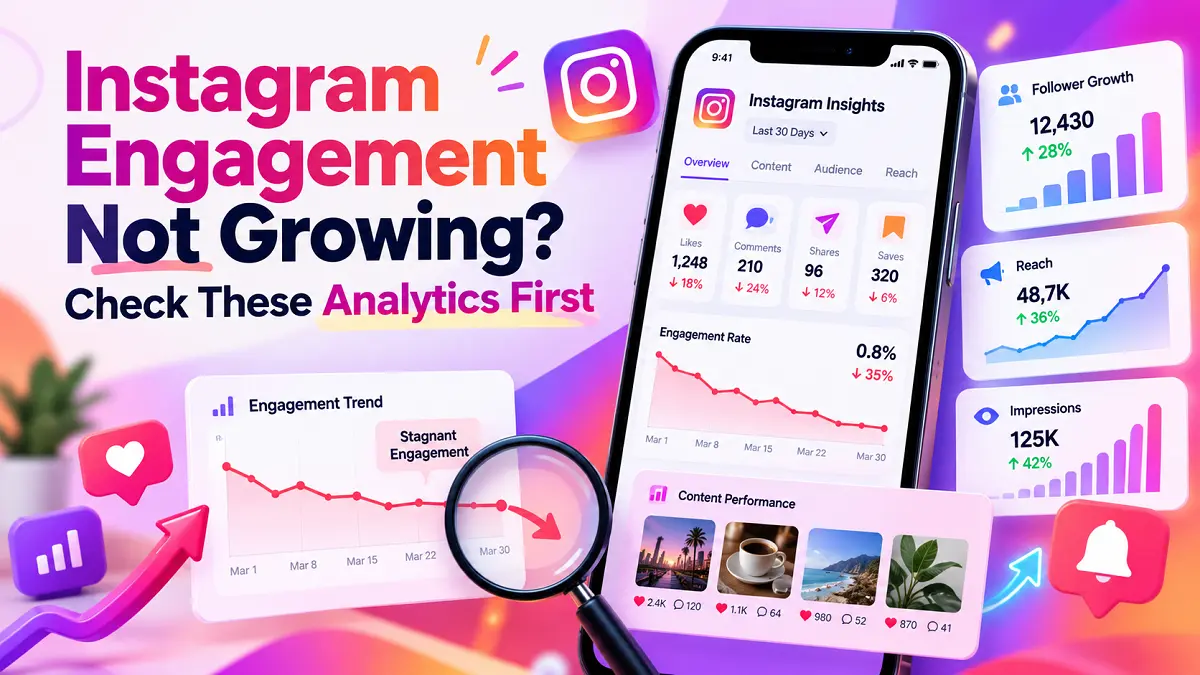
Instagram Engagement Not Growing? Check These Analytics First
Posting regularly on Instagram does not always lead to better engagement. You may be sharing good content, using relevant hashtags, and staying active, yet likes, comments, saves, and shares remain flat.
When that happens, guessing is rarely helpful. Instagram analytics can show what is working, what your audience is ignoring, and where your strategy needs to change. Businesses using professional social media marketing services often rely on these insights to make smarter content decisions instead of simply posting more often.
Start With Your Engagement Rate
Your engagement rate gives you a quick view of how actively people interact with your content.
Instead of looking only at follower count, review how many people are liking, commenting, saving, and sharing your posts. A large audience does not always mean strong engagement.
If your reach is increasing but interactions remain low, your content may be getting seen without giving people a reason to respond.
Look at engagement over several weeks rather than judging one post in isolation.
Check Reach and Impressions
Reach shows how many unique accounts saw your content. Impressions show how many total times your content was displayed.
These numbers can help you understand whether the problem is visibility or engagement.
For example, if reach is low, you may need to improve content format, timing, keywords, hashtags, or collaboration efforts. If reach is strong but engagement is weak, the content itself may not be relevant enough.
A Digital marketing Agency will often compare both metrics before changing a content strategy.
Review Saves and Shares
Likes are useful, but saves and shares often tell you more about how valuable people find your content.
A saved post usually means someone wants to return to it later. A shared post means the content was useful, interesting, relatable, or entertaining enough to send to someone else.
Look for common patterns in posts that receive higher saves and shares.
These could include:
- Tips and how to content
- Checklists
- Educational carousels
- Industry insights
- Before and after examples
- Short tutorials
- Relatable or entertaining posts
Use those patterns to guide future content.
Analyze Which Content Formats Perform Best
Not every audience responds to the same type of content.
Some followers may engage more with Reels, while others prefer carousels, Stories, or static posts. Instagram analytics lets you compare different formats instead of assuming one format will always perform better.
Review metrics such as reach, watch time, shares, saves, replies, and profile visits.
If short videos consistently bring more reach while carousels generate more saves, both formats may deserve a place in your strategy for different reasons.
Check Reel Watch Time and Retention
Getting Reel views is helpful, but views alone do not tell the full story.
Watch time and audience retention can show whether people are actually staying interested.
If viewers leave within the first few seconds, the opening may be too slow or unclear. Try getting to the main point faster and make the first few seconds visually engaging.
A strong hook should make people understand quickly why they should keep watching.
Look at Profile Visits
Profile visits tell you how often content encourages people to learn more about your account.
A post may not generate many comments yet still drive people to your profile. That can be valuable if your goal is brand awareness, leads, website traffic, or sales.
Compare posts that bring the most profile visits. Their topics, visuals, captions, or calls to action may offer clues about what interests potential customers.
Track Website Clicks and Other Actions
For business accounts, engagement should connect to wider marketing goals.
Check whether Instagram is driving website visits, contact actions, direct messages, or other meaningful activity.
If people engage with posts but rarely take the next step, your calls to action may need improvement.
Keep them simple and specific. Instead of telling people to learn more, explain exactly what they will find when they visit your website or contact your business.
Understand When Your Audience Is Active
Posting time is not the only factor that affects engagement, but it can influence how quickly your content receives early interactions.
Review your audience insights to see when followers are most active.
Test different posting times and compare results over several weeks. Avoid changing your schedule based on one unusually successful or weak post.
Consistent testing gives you more reliable information.
Review Audience Growth
Follower growth should be viewed alongside engagement.
If followers are increasing but engagement is falling, your new audience may not be closely matched with your content.
Review which posts attract followers and whether those people continue interacting afterward.
A strong social media strategy should focus on attracting relevant followers, not simply increasing the number displayed on your profile.
Compare Your Top and Lowest Performing Posts
One of the easiest ways to improve your content is to compare your best and weakest posts.
Ask simple questions:
- Which topics generated the most saves?
- Which posts received the most shares?
- Which Reels held attention longest?
- Which captions generated comments?
- Which posts brought profile visits?
Which content had high reach but low interaction?
This turns Instagram analytics into practical decisions instead of another set of numbers.
Do Not Focus on One Metric Alone
Instagram performance is rarely explained by one number.
High reach does not automatically mean strong engagement. Lots of likes may not lead to website traffic. A Reel with fewer views could still bring more inquiries than a viral post.
The right metrics depend on your goal.
Businesses working with social media marketing services should define what success means before measuring results. Brand awareness, engagement, lead generation, website traffic, and sales all require different performance indicators.
Frequently Asked Questions (FAQs)
What is the most important Instagram engagement metric?
There is no single metric that works for every account. Likes, comments, saves, shares, watch time, profile visits, and website clicks can all be important depending on your goal.
Why is my Instagram reach increasing but engagement staying low?
This usually means more people are seeing your content but are not finding it relevant or useful enough to interact with. Review your topics, format, hooks, captions, and calls to action.
How often should I check Instagram analytics?
Weekly reviews are useful for spotting short term patterns, while monthly reviews can provide a clearer picture of overall performance. Avoid making major changes based on one post.
Are saves and shares more useful than likes?
They can be. Saves often indicate long term value, while shares suggest that people found the content useful or interesting enough to send to others. Both can provide deeper insight than likes alone.
Can a Digital marketing Agency help improve Instagram engagement?
Yes. A Digital marketing Agency can review analytics, audience behavior, content formats, and campaign performance to identify where improvements are needed. The strategy should still be based on clear business goals and real performance data.