


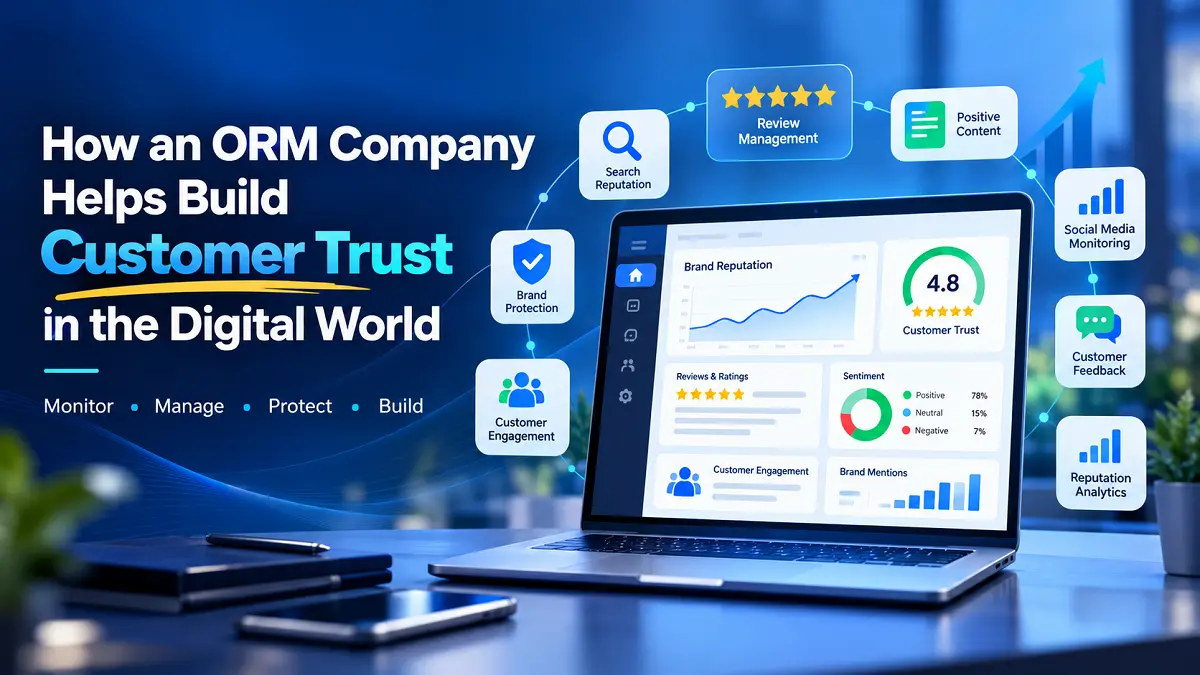
How an ORM Company Helps Build Customer Trust in the Digital World
Before choosing a business, customers often search for its name online, read reviews, and check social media profiles. These simple actions help them decide whether a brand is reliable. A positive online reputation can create confidence, while unanswered complaints or inaccurate information may raise doubts.
For businesses in India, maintaining customer trust requires consistent communication and a credible online presence. An ORM Reputation Management Company helps businesses monitor public feedback, address concerns, and improve how customers perceive their brand across digital platforms.
Online reputation management goes beyond maintaining positive ratings. It focuses on honest communication, customer satisfaction, and building relationships that encourage long-term trust.
Why Customer Trust Matters in the Digital World
Customer trust plays an important role in purchasing decisions. People want to feel confident before spending money or sharing personal information with a business.
A brand’s online presence often creates its first impression. Search engine results, Google reviews, social media comments, and customer experiences can affect how people view a company.
When businesses communicate clearly and respond to concerns, they show that they value their customers. This approach can strengthen credibility and encourage repeat purchases.
Trust also helps businesses maintain stronger relationships during difficult situations. Customers may respond more positively to a brand that accepts responsibility and works to resolve problems.
What Does an ORM Company Do?
An online reputation management company helps businesses monitor, manage, and improve their reputation across digital channels.
Its work involves tracking brand mentions, reviewing customer feedback, identifying misleading information, and supporting professional communication.
Unlike general Digital Marketing activities that often focus on reaching new audiences, reputation management pays particular attention to how existing and potential customers perceive a business.
A structured reputation management strategy usually covers several important areas:
• Monitoring customer reviews and online conversations.
• Responding to complaints and customer questions.
• Tracking brand mentions across websites and social media.
• Maintaining accurate business information.
• Identifying reputation risks before they become serious.
• Encouraging genuine customer feedback.
• Improving communication during public complaints or disputes.
These activities help businesses maintain a more transparent and reliable digital presence.
How ORM Services Help Businesses Build Customer Trust
Building customer trust takes time and consistent effort. Businesses need to listen to customers, provide accurate information, and address concerns responsibly.
Professional ORM Services support these activities through organized monitoring, feedback management, and communication strategies.
1. Managing Customer Reviews Effectively
Online reviews give customers valuable information about a business. People often check ratings and read feedback before choosing a restaurant, hospital, educational institution, or online store.
Reputation management teams monitor reviews across platforms and help businesses respond appropriately.
A thoughtful response to a negative review can show that the company takes customer experiences seriously.
For example, if a customer reports delayed delivery, the business can acknowledge the concern, explain the next steps, and offer a suitable resolution.
The goal should not be to hide genuine criticism. Instead, businesses should use feedback to improve their services and build customer confidence.
2. Monitoring Brand Mentions across Digital Platforms
Customers discuss brands across Google, social media, online forums, and review websites. These conversations provide useful insights into public perception.
Reputation monitoring helps businesses identify what customers appreciate and where they face difficulties.
For example, repeated complaints about customer support may indicate a problem that requires attention.
By identifying such patterns early, businesses can improve their processes and prevent similar issues from affecting more customers.
3. Responding to Negative Feedback Professionally
Negative feedback does not always mean that a business has a poor reputation. Customers often judge brands by how they handle criticism.
Ignoring complaints or responding defensively can create further dissatisfaction.
A professional response should acknowledge the concern, provide useful information, and explain how the customer can seek assistance.
When a business makes a mistake, accepting responsibility and taking corrective action can help restore confidence.
Consistent and respectful communication shows customers that their concerns matter.
4. Maintaining Accurate Information across Search Results
Customers often search for a business before contacting it. Search results may display websites, business profiles, articles, reviews, and other public information.
Outdated contact details, incorrect service descriptions, or inconsistent business information can confuse potential customers.
Online Reputation Management Services help businesses identify inaccurate details and maintain consistent information across relevant platforms.
Accurate business profiles, updated websites, and helpful content make it easier for customers to find reliable information.
This consistency supports a more credible online identity.
How Reputation Management Helps Handle Online Crises
Even established businesses can face unexpected reputation challenges. A customer complaint may attract widespread attention, or misleading information may circulate on social media.
The way a company responds can affect public confidence.
An ORM Reputation Management Company can help businesses assess the situation, identify verified facts, and prepare appropriate responses.
An effective approach involves:
1. Identifying the source and nature of the issue.
2. Checking facts before publishing a response.
3. Acknowledging genuine customer concerns.
4. Sharing accurate information through relevant channels.
5. Explaining corrective actions when necessary.
6. Monitoring feedback after the response.
For example, if customers report a service disruption, a timely explanation and regular updates can help reduce confusion.
Businesses should avoid making promises they cannot keep. Honest communication and visible improvements create stronger foundations for trust.
The Role of Social Media in Building Brand Credibility
Social media gives customers a direct way to communicate with businesses. People use these platforms to ask questions, share experiences, and report problems.
An active social media presence can help businesses appear accessible and responsive.
However, posting regularly is not enough. Brands also need to answer relevant questions, address complaints, and communicate consistently.
A helpful response to a public question may benefit other customers who have similar concerns.
Businesses should also avoid publishing misleading testimonials or exaggerated claims. Genuine customer experiences and accurate information contribute more meaningfully to long-term credibility.
Why Consistent Brand Communication Matters
Customers expect a business to provide reliable information across its website, social media profiles, customer support channels, and online listings.
Conflicting messages can create confusion and weaken confidence.
For example, if a company advertises one return policy on its website but communicates different conditions through customer support, customers may question its reliability.
Reputation management helps businesses identify such inconsistencies and improve communication.
Clear policies, accurate service information, and timely updates help customers make informed decisions.
Consistency also makes it easier for businesses to maintain a recognizable and trustworthy identity across digital platforms.
How Businesses Can Measure Customer Trust Online
Improving online reputation requires regular evaluation. Businesses need to identify whether their efforts are improving customer experiences and public perception.
Several indicators can provide useful insights.
| Reputation Indicator | What It Helps Measure |
|---|---|
| Customer Reviews | Customer satisfaction and recurring concerns |
| Average Ratings | Overall rating trends across review platforms |
| Response Time | How quickly businesses acknowledge customer concerns |
| Complaint Resolution | How effectively businesses address reported problems |
| Brand Mentions | How frequently people discuss the business online |
| Customer Feedback | Areas where products or services need improvement |
| Repeat Customer Activity | Customer retention and ongoing relationships |
No single metric can measure trust completely. Businesses should review these indicators together and consider the actual quality of customer experiences.
Why Long-Term Reputation Management Matters
A strong online reputation requires continuous attention. Customer expectations change, new reviews appear, and online conversations develop over time.
Businesses that monitor feedback regularly can identify problems before they become more serious.
Ongoing ORM Services can support this process by helping companies maintain accurate information, respond to customer concerns, and track reputation trends.
However, reputation management cannot replace good products, dependable services, or responsible business practices.
Lasting customer trust develops when a company’s actions match its promises.
How to Choose the Right Reputation Management Approach
Businesses have different reputation challenges. A small local business may need help managing Google reviews, while a larger organization may need support across several online platforms.
Before choosing professional Online Reputation Management Services, businesses should review their current reputation and identify areas that need improvement.
Important factors include:
• Experience handling relevant reputation challenges.
• A clear approach to monitoring online feedback.
• Ethical practices for managing reviews and complaints.
• Transparent reporting and measurable performance indicators.
• Effective communication during reputation concerns.
• Familiarity with Indian customer expectations and digital platforms.
Businesses should avoid approaches that promise to remove every negative review or guarantee positive public opinions.
A reliable strategy focuses on genuine feedback, accurate information, and meaningful customer improvements.
Conclusion
Customer trust plays an important role in building a credible digital presence. Online reviews, search results, social media interactions, and customer support experiences all contribute to how people perceive a business.
An ORM company helps businesses manage these interactions through reputation monitoring, professional communication, accurate information, and responsible complaint handling.